Cloud-based Retail Experience, C. Wonder, 2011
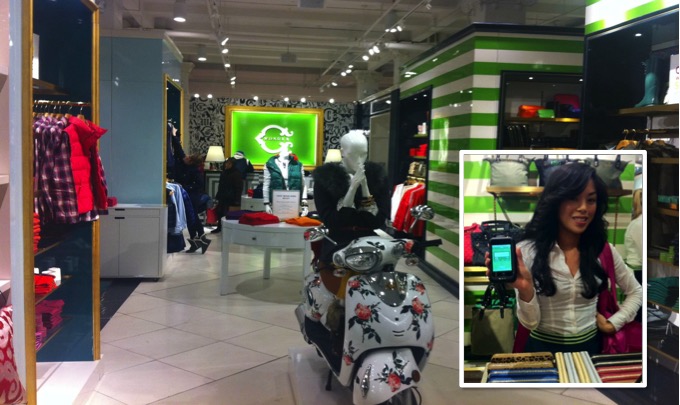
C.Wonder: Goodbye registers! Hello retail system built on mobile and cloud computing
C. Wonder challenged us to imagine how technology could support a polished, highly personalized retail experience without the usual cost and complexity of store infrastructure. Our team developed a cloud-based retail model that replaced traditional back-room systems and fixed registers with mobile, flexible tools that were easier to deploy and scale.
C. Wonder posed an interesting retail design challenge: how do you deliver a polished, high-touch brand experience while keeping store infrastructure lean and costs low? As the company prepared to launch its flagship New York store in 2011, Cisco was brought in to help imagine how technology could support the brand goal of “redefining value retailing” by removing the usual retail techonolgy complexity and cost. C. Wonder offers high quality apparel, accessories and home decor, all at significantly lower price points than the competition
Our team developed a cloud-based store model that replaced much of the traditional physical IT footprint with mobile devices, cloud services, and a more flexible operating approach. There were no back-room servers, no fixed registers, and no heavy in-store setup. Instead, mobile tools and cloud-connected systems supported point of sale, reporting, and store operations in a way that felt lighter, faster, and easier to scale.
The result was a more flexible and brand-consistent customer experience. Transactions were untethered from a fixed counter, staff could move naturally through the space. It enabled a retail environment where technology quietly reinforced the brand: stylish, efficient, personalized, and accessible.
New stores could be opened with far less friction. Devices arrived preloaded with software and payment peripherals, synced quickly to the cloud, and required little training for staff. The result was a retail model that felt modern and efficient without putting the technology front and center.
New stores could be opened with far less friction. Devices arrived preloaded with software and payment peripherals, synced quickly to the cloud, and required little training for staff. The result was a retail model that felt modern and efficient without putting the technology front and center.

Concepts Developed for C. Wonder
During the initial store design, the CIO approached my team for ideas on how technology could deliver an innovative retail experience that would embody the C. Wonder brand personality, and delight the customer while still keeping costs low.
However, not every good idea makes it to launch. During the innovation process, several additional concepts were developed for C. Wonder that ultimately led to patent applications, even though they were not implemented in the final store experience.
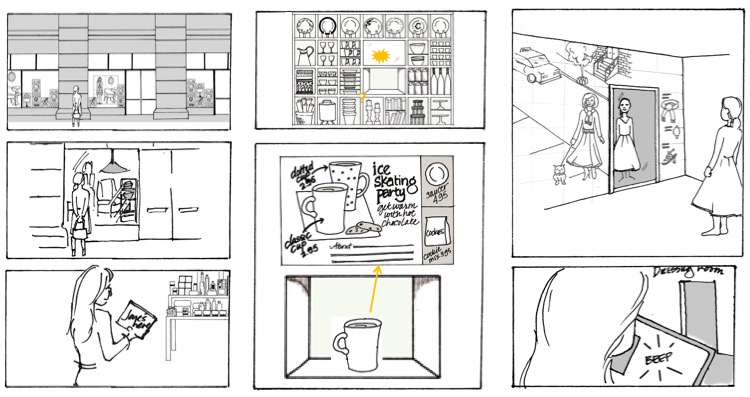
Storefront “Wow”: A customer standing in front of a store window triggers engaging brand messaging and visualizations, customized based on data such as sales, promotions, the weather, time of day or the season.
“Home Decor” Smart Shelves: Placing product on a shelf cubbyhole displays related content. A product such as a mug might trigger a video of the mug being filled with hot chocolate, cookies on a matching plate, with placemat, napkins or other cross-sell items.
Scenic Dressing Room: Sensors attached to items trigger a dynamic audio-visual scene based on what the shopper is currently trying on. Women consider when they’ll wear an outfit as they evaluate it. Digital display content aims to inspire them by showing scenes or settings that fit the item.