IoT Shopping Experience, Prada, 2000
![]()
![]()
![]()
![]() Prada Closet displays content related to items in the dressing room. Prada Staff Device enables inventory lookup and is a remote control for digital signage. “Snorkle” enables browsing content related to the nearby merchandise displays.
Prada Closet displays content related to items in the dressing room. Prada Staff Device enables inventory lookup and is a remote control for digital signage. “Snorkle” enables browsing content related to the nearby merchandise displays.

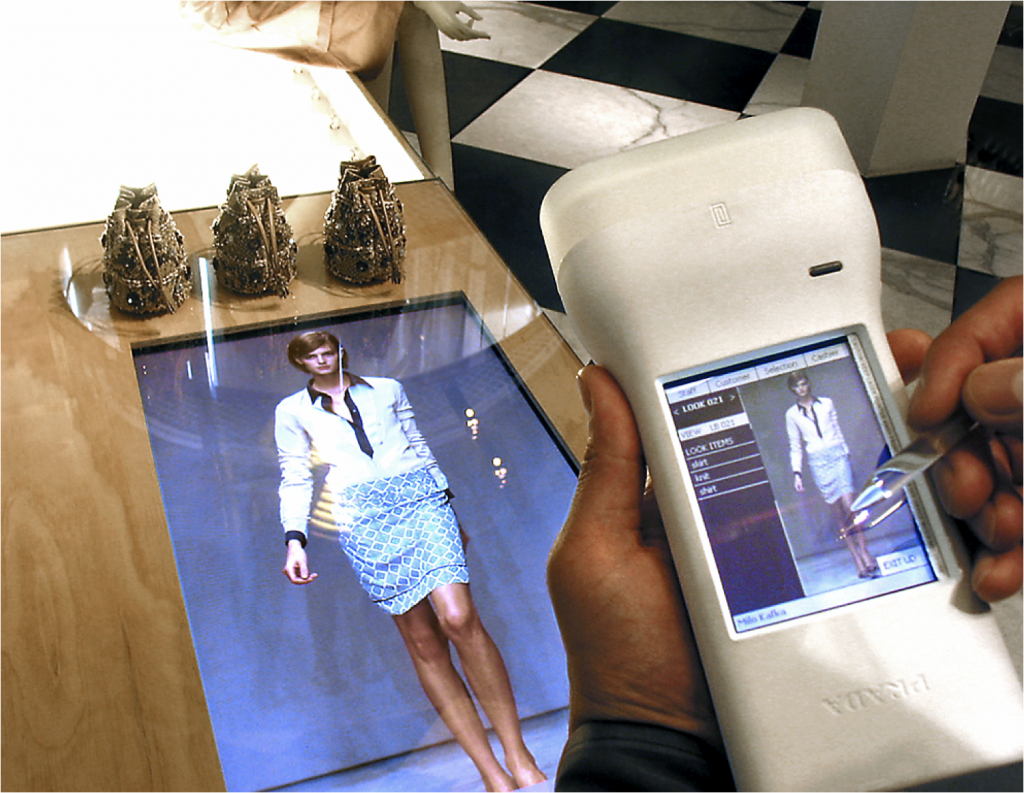


Prada’s New York flagship used item-level RFID to turn luxury retail into a more connected, immersive experience. Selected by Rem Koolhaas, our LBi team built the software that linked merchandise, staff devices, digital displays, and customers to create a personalized, luxury experience. Associates could check inventory, access customer-informed recommendations, and control nearby signage, while embedded readers in tables and dressing rooms triggered collection-based “Aura” content.
How do you design a store that delivers the same level of trend-setting innovation as the fashion brand it represents? That question sat at the heart of Prada Epicenter Store in New York, where our LBi team was selected by Rem Koolhaas to design and build the software behind one of the earliest item-level RFID retail experiences.

The goal was bigger than operational efficiency. Prada wanted the store to signal innovation—to feel like a new kind of luxury environment where technology enhanced the shopping experience without losing the brand’s sense of style, curation, and theater.
For participating customers, the experience extended into the dressing rooms and product displays. Embedded readers detected tagged items placed on tables or shelves and triggered “Aura” content tied to the collection: runway footage, imagery, and inspiration that added a narrative layer to the act of shopping. Customers who opted in for a customer card could also be recognized on arrival by an alert sent to the staff device, allowing associates to deliver more personalized service.
The project helped redefine what retail innovation could look like at the time, and the team later supported Epicenter launches in Tokyo and Los Angeles.


Screen Designs for the Dressing Room and Staff Device
Related Information
Prada Epicenter Store New York